Bike Repair
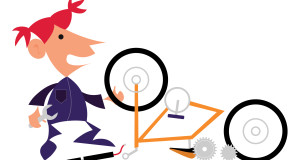
There is nothing quite like the sudden, squishy disappointment of realization hitting you mid-ride: your bike tire is completely flat. A flat tire will completely bottom out against the ground, making it impossible (and unsafe) to ride.
Fortunately, fixing a puncture is a rite of passage for every cyclist. It’s a simple, cheap skill that saves you from walking home or paying a bike shop. Here is your ultimate, step-by-step guide to finding that pesky puncture and patching it up like a pro.

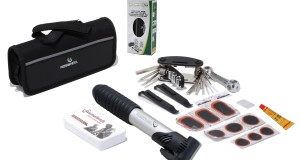
The Toolbox: What You’ll Need
Before you get your hands dirty, gather these essential tools:
- Bike tire levers (to safely remove the tire)
- A puncture repair kit (containing sandpaper, patches, and rubber solution/glue)
- A bike pump
- A bucket of water (optional, but highly recommended)
- A chalk or marker
Step 1: Remove the Wheel and Inner Tube
First thing’s first, we need to get to the source of the problem, which is the rubber inner tube hidden inside your tire.
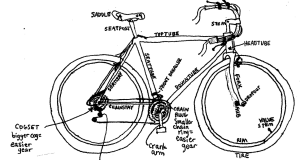
- Remove the wheel: If it’s the rear wheel, shift into the smallest gear first to make removal easier. Flip the quick-release lever and slide the wheel out.
- Deflate fully: Press the valve core to let out any remaining air.
- Unseat the tire: Insert a tire lever under the edge (bead) of the tire, scoop it over the rim, and hook it to a spoke. Use a second lever a few inches away to slide along the rim until one side of the tire is completely free.
- Pull out the tube: Carefully pull the inner tube out from inside the tire, unscrewing the valve ring if necessary.
Step 2: Hunt Down the Puncture
Sometimes a puncture is obvious, but often it’s a microscopic pinprick. Here is how to track it down:
- The Pump & Listen Method: Pump some air into the naked inner tube. Hold it close to your ear and pass it around slowly. Listen for a hissing sound, or feel for a faint jet of air against your lip or cheek.
- The Water Bucket Method (Foolproof): If listening doesn’t work, submerge the inflated tube in a bucket of water section by section. Watch for a stream of tiny bubbles escaping.
- Mark the spot: Once you find the hole, dry the area and circle it with chalk or a marker so you don’t lose it.
⚠️ Crucial Step: Before you move on, carefully run your fingers along the inside of the tire casing. If the thorn, glass shard, or wire that caused the flat is still stuck in the tire, it will instantly puncture your newly repaired tube! Remove it carefully.
Step 3: Patch the Tube
Now that you’ve found the culprit, it’s time to seal the deal.
- Prep the surface: Use the small piece of sandpaper from your kit to gently scuff the area around the hole. This roughens up the rubber so the glue can bond properly. Wipe away the dust.
- Apply the glue: Spread a thin layer of rubber solution (glue) over an area slightly larger than the patch you intend to use.
- Wait for it to dry: This is where most people mess up! Do not stick the patch on wet glue. Wait roughly 2 to 3 minutes until the glue turns from shiny to a dull, tacky matte finish.
- Apply the patch: Peel the foil backing off the patch (try not to touch the sticky grey/black side) and press it firmly over the hole.
- Press and hold: Press down hard with your thumbs from the center outward, smoothing out any air bubbles. Hold it firmly for about 1 to 2 minutes.
Step 4: Reassemble and Ride
Your tube is now air-tight again! Let’s get everything back together.
- Check the patch: Pump a tiny amount of air into the tube just to give it shape and ensure the patch holds.
- Pop the tube back in: Insert the valve stem back through the rim hole first, then feed the rest of the tube smoothly inside the tire. Ensure it isn’t twisted.
- Pop the tire back on: Use your hands to push the tire bead back over the edge of the rim. Avoid using tire levers to force it back on, as you might accidentally pinch and pop your newly repaired tube!
- Pump it up: Inflate the tire to its recommended PSI (written on the sidewall of the tire).
Reinstall the wheel onto your bike, tighten the quick-release mechanism, and you are ready to hit the pavement again. Happy riding!