Bike Repair

There is nothing quite like the freedom of a long bike ride, until a mechanical issue strands you miles from home with a dead phone battery and no reception.
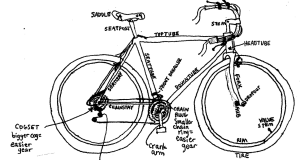
Every cyclist eventually faces a breakdown. The difference between a minor speed bump and a miserable walk home comes down to one little accessory: the saddle bag. This small pouch, which clips discreetly right under your bicycle seat, is your insurance policy on the road.
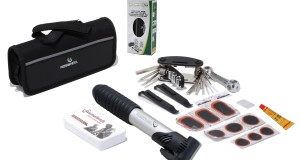
If you are putting together your first emergency kit, here is the essential checklist of what to pack so you can fix almost any common issue on the fly.
1. The Flat-Fixers (The Non-Negotiables)
Flats are the most common roadside issue. You should always carry the exact tools needed to get your rolling stock back in action.
- Tire Levers: Pack at least two sturdy plastic tire levers. Trying to pry a tire off a rim with your bare hands or keys is a recipe for broken fingernails and frustration.
- Spare Inner Tube: While patch kits are great, patching a tube on a rainy or windy roadside is tedious. It is much faster to swap in a fresh tube on the spot, drop the punctured one in your bag, and patch it in the comfort of your living room later. Make sure the spare tube matches your tire size and valve type (Presta vs. Schrader).
- A Patch Kit: Yes, bring this too! It takes up almost zero space, and if you happen to get a second flat on the same ride, your spare tube is already gone. The patch kit is your backup plan.
2. The Inflation System
A new tube is useless without air. You have two main choices here:
- The Mini-Pump: Reliable, infinite air, and it never runs out. The downside is that pumping a tire to full pressure with a hand pump requires a bit of elbow grease.
- CO2 Inflator & Cartridges: A small nozzle that screws onto a compressed CO2 gas canister. It inflates a tire to full pressure in literally one second. It’s incredibly convenient, but you only get one shot per cartridge, if you misalign the nozzle and blast the air into the void, you’re stranded.
3. The Multi-Tool: Your Portable Workshop
A cycling-specific multi-tool is like a Swiss Army knife for your bike. Look for one that includes:
- Allen (Hex) Keys: 4mm, 5mm, and 6mm are the most common sizes used to tighten slipping seatposts, loose handlebars, or rattling bottle cages.
- Torx T25 Wrench: Often needed if your bike uses disc brakes.
- A Chain Tool: High-end multi-tools include a small chain breaker. If your chain snaps mid-ride, this tool allows you to remove the broken link and reattach it so you can at least pedal home.
4. Clever “Pro-Tip” Additions
The best saddle bags have a few macgyvered extras tucked into the corners:
- A Quick-Link (Master Link): A tiny, cheap metal link that matches your chain speed (e.g., 11-speed). If your chain breaks, snapping a quick-link in place takes seconds.
- A Crisp Dollar Bill: If you slice the actual sidewall of your tire on a piece of sharp glass, a new inner tube will just balloon out of the tear and pop instantly. If you fold up a dollar bill (or an empty energy gel wrapper) and place it inside the tire over the tear, it acts as a tough “boot” that keeps the tube contained until you get home.
- A Few Nitrile Gloves: Keeping these in your bag ensures you don’t get black drivetrain grease all over your hands and handle grips.
💡 Saddle Bag Rule of Thumb: Pack it tightly so things don’t rattle around, and leave it on your bike permanently. That way, you never have to ask yourself “Did I bring my tools?” before rolling out the door.
What’s the one tool you’ve carried that completely saved a ride for you?